Explore The River in the Trees · Complete review edition · Orders closed

TINYSHELF DISPATCHES / THE AMAZON

The River
in the Trees

Their name on the invitation.
Their choices in a changing forest.

Explore a floodplain twice, months apart. Choose animals to follow, build a small river landscape, then turn the TREE patches over when the water returns.

For ages 8–12 · Personal book, regional map, 22 animal cards and seasonal game pieces
Digital review available · Orders are closed

Loading the print lettering…
The actual digital design.
Physical sample still to come.
A PERSONAL INVITATION & GIFT NOTE22 ANIMALS TO LOOK CLOSER ATTWO SEASONAL VISITSA COMPLETE PAPER GAME

The same place, months later

The river comes between the trees.

In the paper game, turn every TREE patch over before turn 4. It stays in the same place and keeps its type. The two pictures below are the actual sides of one included patch.

The board’s season changes which animal patterns can be recorded. The season and shapes are puzzle choices; this is an invented landscape, with researched natural history alongside it.

Try the complete first-play guide →
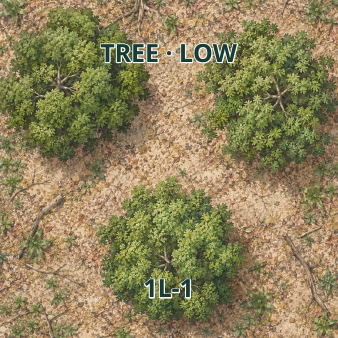
TREE · LOW
1L-1
LOW: the forest floor is exposed. Same TREE, same viewpoint.

Their expedition, with Lia and Rosa beside them

Choose what catches their attention.

Begin with eight ready animals. Choose one to explore before taking a pair of terrain patches. What they place can complete a pattern, leave room for a later discovery or change the next choice. The optional briefs offer another reason to return.

The book introduces the real Mamirauá floodplain and its wildlife. Lia and Rosa are fictional guides. The small landscape and animal patterns are a game, with their model boundaries stated on the pieces.

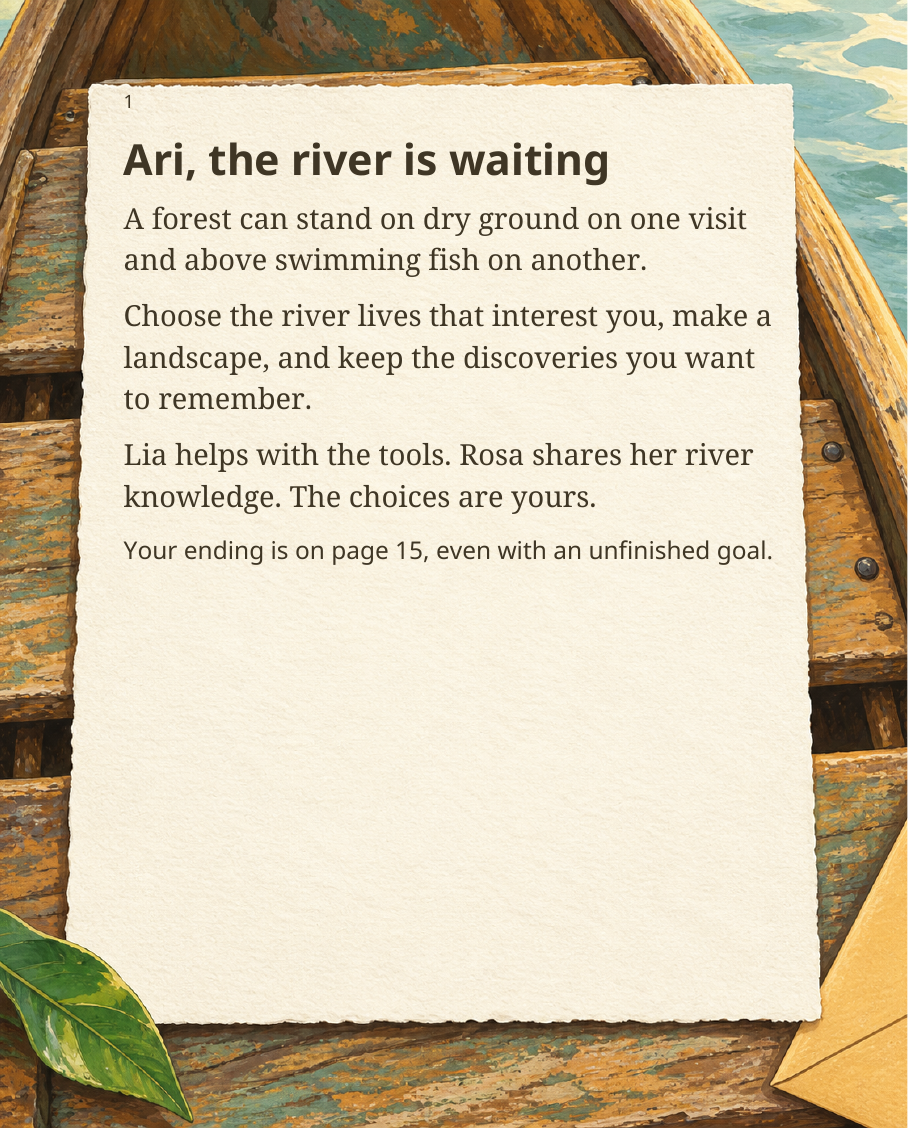
Ari, the river is waiting
A forest can stand on dry ground on one visit
and above swimming fish on another.
Choose the river lives that interest you, make a
landscape, and keep the discoveries you want
to remember.
Lia helps with the tools. Rosa shares her river
knowledge. The choices are yours.
Your ending is on page 15, even with an unfinished goal.
1THE PERSONAL BOOK

An invitation addressed to them.

Their name appears on six book faces. Your optional gift note has its own page. The story, species and rules are the same for every recipient.
The Amazon, closer
NORTHERN SOUTH AMERICA
BRAZIL
PERU
COLOMBIA
ECUADOR
BOLIVIA
Atlantic Ocean
Pacific Ocean
Equator
Mamirauá region
Tefé Manaus
Solimões Amazon
N
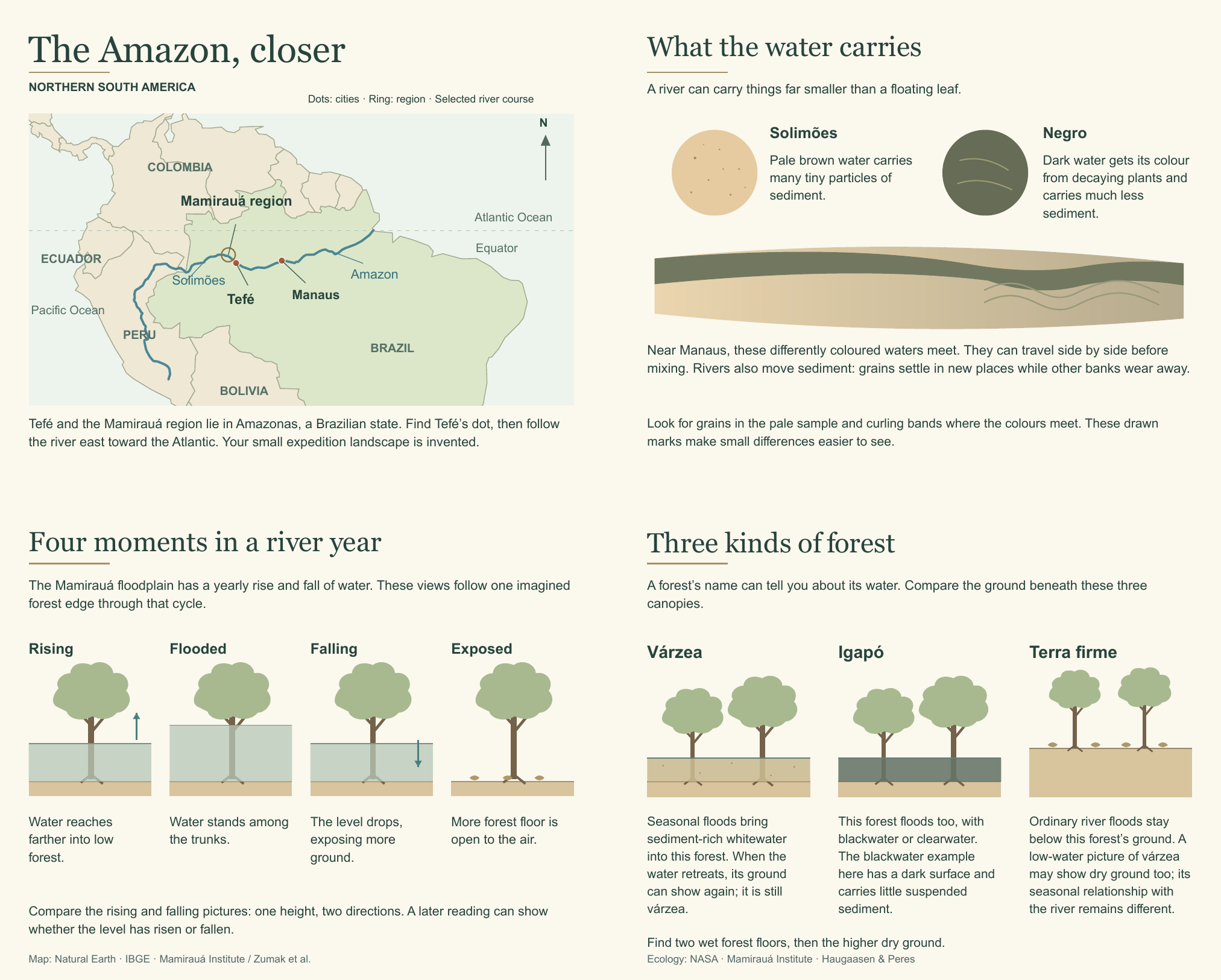
T efé and the Mamirauá region lie in Amazonas, a Brazilian state. Find T efé’s dot, then follow
the river east toward the Atlantic. Your small expedition landscape is invented.
What the water carries
A river can carry things far smaller than a floating leaf.
Solimões
Pale brown water carries
many tiny particles of
sediment.
Negro
Dark water gets its colour
from decaying plants and
carries much less
sediment.
Near Manaus, these differently coloured waters meet. They can travel side by side before
mixing. Rivers also move sediment: grains settle in new places while other banks wear away.
Look for grains in the pale sample and curling bands where the colours meet. These drawn
marks make small differences easier to see.
Four moments in a river year
The Mamirauá floodplain has a yearly rise and fall of water. These views follow one imagined
forest edge through that cycle.
Rising
Water reaches
farther into low
forest.
Flooded
Water stands among
the trunks.
Falling
The level drops,
exposing more
ground.
Exposed
More forest floor is
open to the air.
Compare the rising and falling pictures: one height, two directions. A later reading can show
whether the level has risen or fallen.
Three kinds of forest
A forest’s name can tell you about its water. Compare the ground beneath these three
canopies.
Várzea
Seasonal floods bring
sediment-rich whitewater
into this forest. When the
water retreats, its ground
can show again; it is still
várzea.
Igapó
This forest floods too, with
blackwater or clearwater.
The blackwater example
here has a dark surface and
carries little suspended
sediment.
Terra firme
Ordinary river floods stay
below this forest’s ground. A
low-water picture of várzea
may show dry ground too; its
seasonal relationship with
the river remains different.
Find two wet forest floors, then the higher dry ground.
Dots: cities · Ring: region · Selected river course
Map: Natural Earth · IBGE · Mamirauá Institute / Zumak et al. Ecology: NASA · Mamirauá Institute · Haugaasen & PeresTHE REGIONAL MAP

Find the real place.

A 20 × 16 inch illustrated map connects river courses, seasonal change and three forest settings. Its reverse is blank.
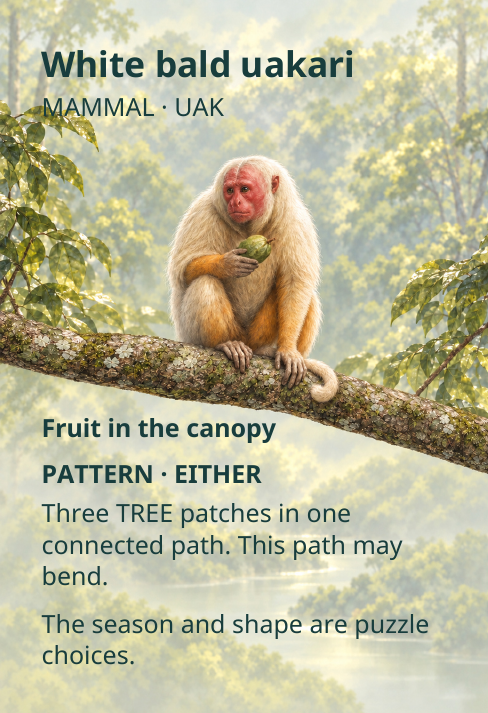
White bald uakari
MAMMAL · UAK
Fruit in the canopy
PATTERN · EITHER
Three TREE patches in one
connected path. This path may
bend.
The season and shape are puzzle
choices.THE INCLUDED COLLECTION

A reason to turn each card.

22 animal cards include fish, birds, mammals and other floodplain life. Each has a playable pattern and a different observation on its reverse.

Proposed format: an 8 × 10 inch hardcover with 24 numbered pages and four cover/endpaper faces; 22 cards at 3 × 4.5 inches; 24 two-inch terrain pieces; map, rules and play aids. Materials, binding and pack fit await qualification.

Made personal

See their name in the book.

Your gift note has a page of its own. Explore the cover, invitation and the pages they can make their own.

One edition for ages 8–12.

Preview only. Details stay on this page and disappear when you leave or reload. No photograph is requested.

Loading the print lettering…
Cover · 1 of 6 personalized pages

The lettering, line breaks and artwork follow the selected book. Paper, colour and binding await physical review.

A page they can keep as their own

There is no writing test at the end.

They can leave the landscape as it is, choose a detail to remember, draw, add words or share a question. The ending remains available with an unfinished goal. No phone is needed to play.