WHOLE-BIOME EXPLORATION / COMPLETE DIGITAL REVIEW 0.1
The River in the Trees
The preferred book, all 22 animal fronts and backs, every terrain piece, the regional map, play guides and packing proofs. Compare both complete visual editions at the same size.
Open the READY collection
Eight animals begin the first visit.
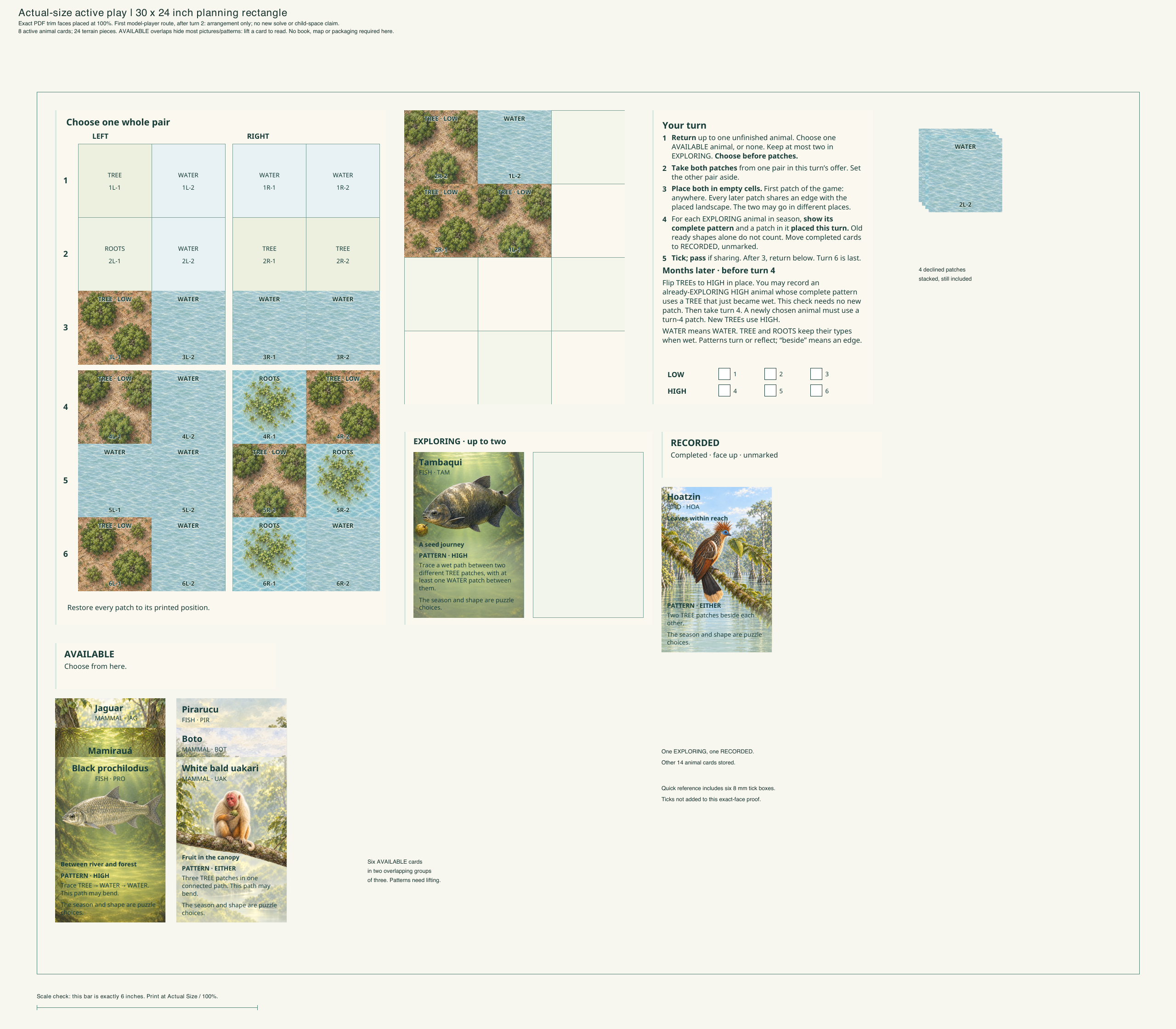
Keep the other fourteen included animals for browsing or a later optional selection. Set out the landscape board, offers, exploring mat, available and recorded labels, and quick reference. Restore the 24 terrain pieces to the six printed offers with TREE sides LOW.
Read the invitation on book page 1, then pages 3–5. Choose an animal before choosing patches. You can keep at most two animals in EXPLORING. The First River Page asks for four recorded animals, including Tambaqui or Jaguar.
After turn 3, return months later: turn every TREE to HIGH in the same position. Read pages 8–11 or the rules before turn 4. Turn 6 ends the game; the ending is available without winning or writing.
Start the optional first-play guideEvery page, in its printed order
The personal book.
24 numbered pages, with front and back covers and inside cover faces. The short example is addressed to Ari. The longest example uses the complete 40-character name, 60-character sender and 240-character note.
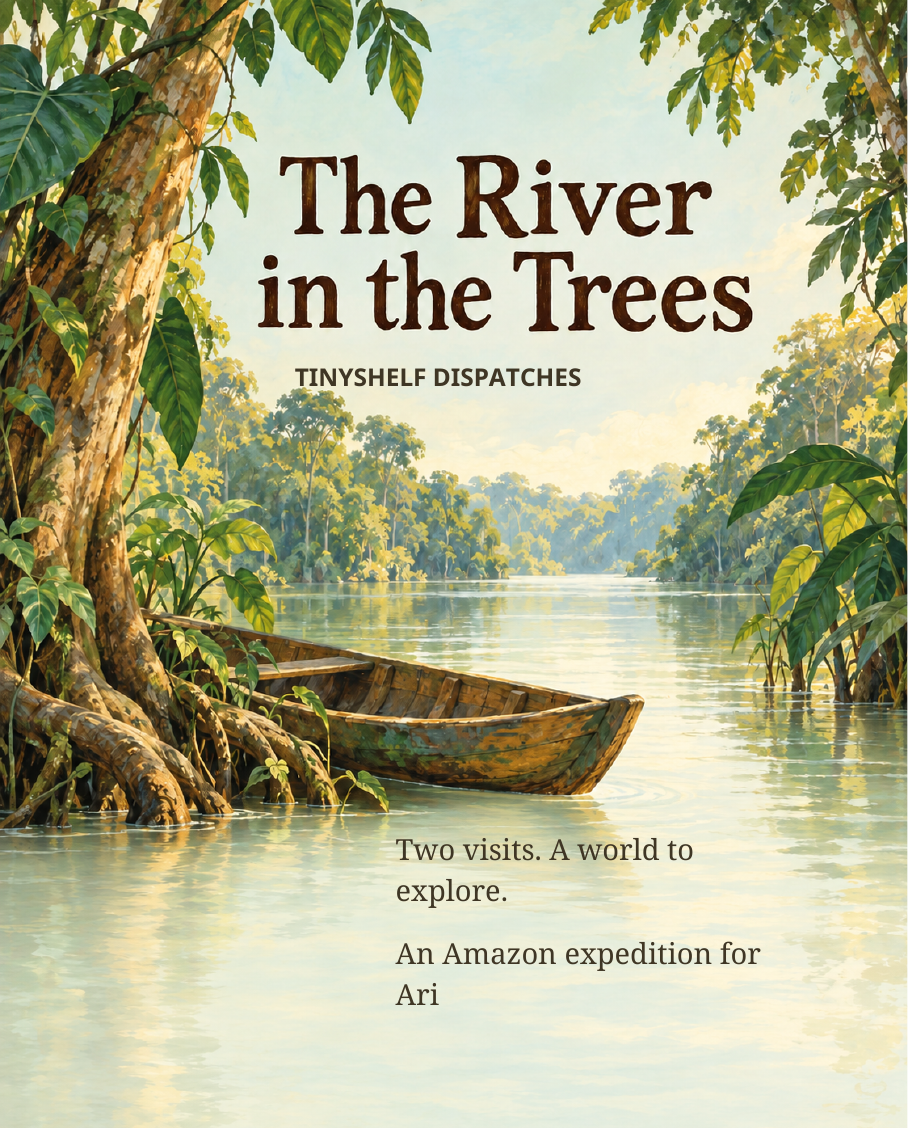
Select an image for full size. Facing pages preserve the actual order; pages 15 and 16 are on opposite sides of a leaf.
Read this page’s text
TINYSHELF DISPATCHES Two visits. A world to explore. An Amazon expedition for Ari
The visible painted title is “The River in the Trees.”
The same place, months later
The river comes between the trees.
In the paper game, turn every TREE patch over before turn 4. It stays in the same place and keeps its type. The two pictures below are the actual sides of one included patch.
The board’s season changes which animal patterns can be recorded. The season and shapes are puzzle choices; this is an invented landscape, with researched natural history alongside it.
Try the complete first-play guide →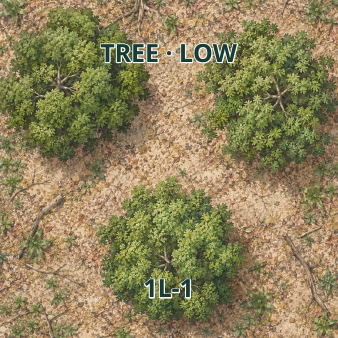
The complete collection and every play piece
Turn it over. Look a little closer.
The first game uses eight READY animals. Fourteen more are included for browsing and optional later selections. All 24 terrain pieces are used to prepare the six offers. At most two animals are in EXPLORING at once.
Printed text
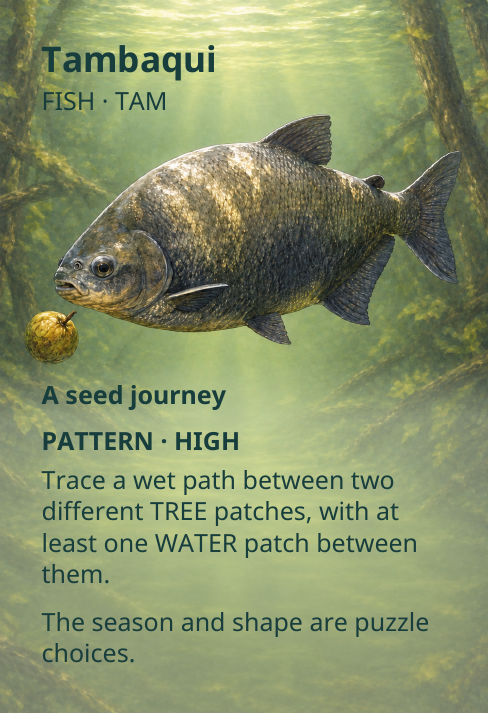
Tambaqui FISH · TAM A seed journey PATTERN · HIGH Trace a wet path between two different TREE patches, with at least one WATER patch between them. The season and shape are puzzle choices.
Printed text
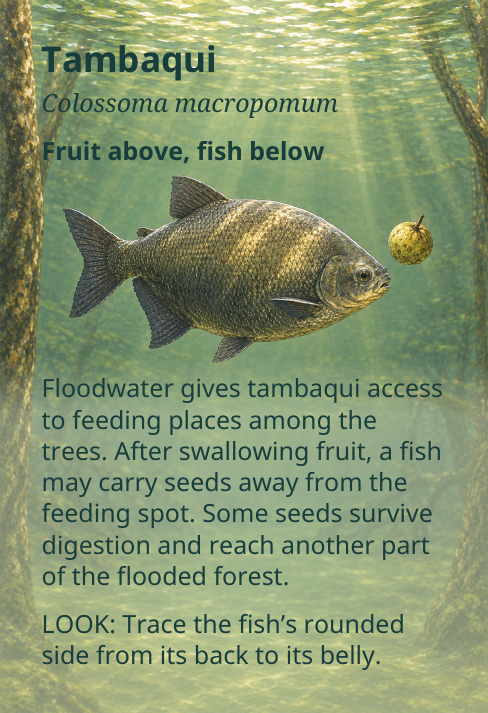
Tambaqui Colossoma macropomum Fruit above, fish below Floodwater gives tambaqui access to feeding places among the trees. After swallowing fruit, a fish may carry seeds away from the feeding spot. Some seeds survive digestion and reach another part of the flooded forest. LOOK: Trace the fish’s rounded side from its back to its belly.
Printed text
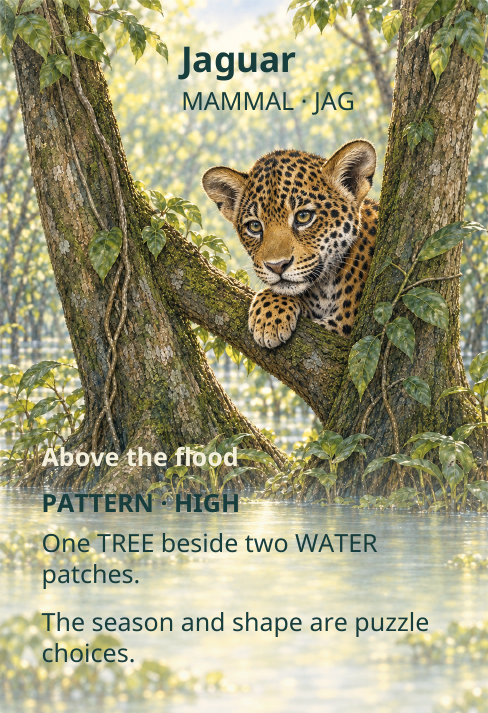
Jaguar MAMMAL · JAG Above the flood PATTERN · HIGH One TREE beside two WATER patches. The season and shape are puzzle choices.
Printed text
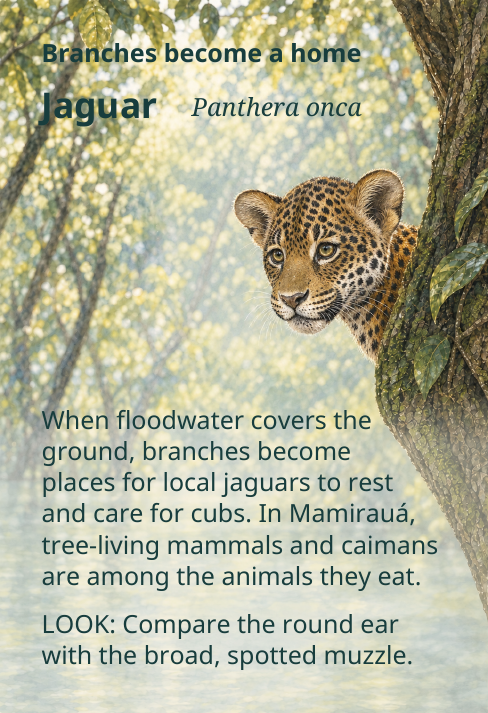
Branches become a home Jaguar Panthera onca When floodwater covers the ground, branches become places for local jaguars to rest and care for cubs. In Mamirauá, tree-living mammals and caimans are among the animals they eat. LOOK: Compare the round ear with the broad, spotted muzzle.
Printed text
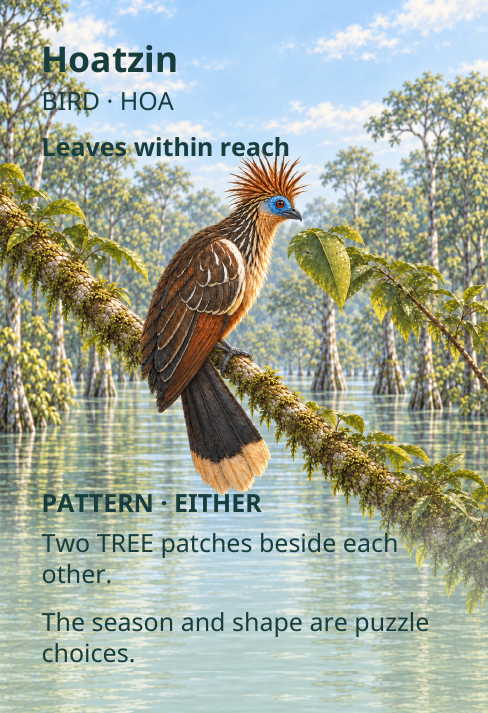
Hoatzin BIRD · HOA Leaves within reach PATTERN · EITHER Two TREE patches beside each other. The season and shape are puzzle choices.
Printed text
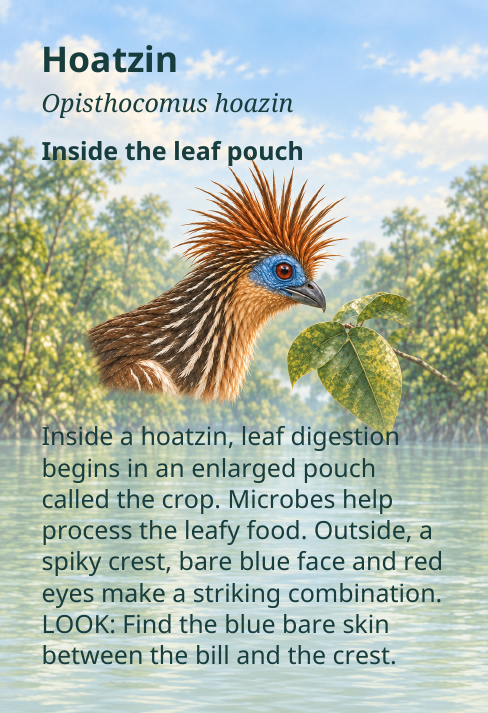
Hoatzin Opisthocomus hoazin Inside the leaf pouch Inside a hoatzin, leaf digestion begins in an enlarged pouch called the crop. Microbes help process the leafy food. Outside, a spiky crest, bare blue face and red eyes make a striking combination. LOOK: Find the blue bare skin between the bill and the crest.
Printed text
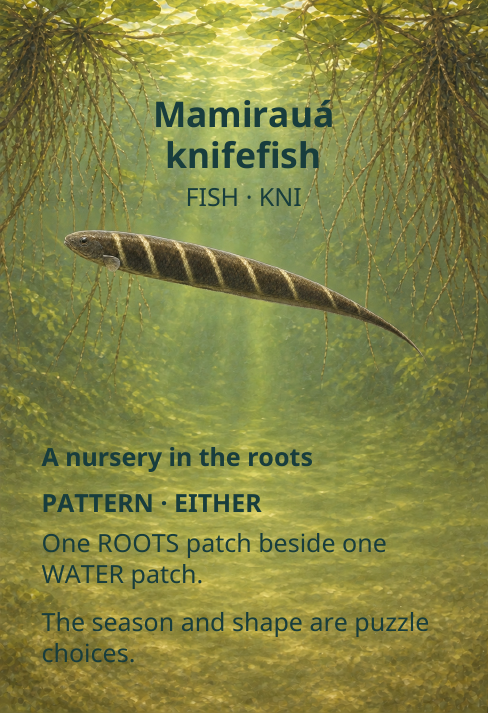
Mamirauá knifefish FISH · KNI A nursery in the roots PATTERN · EITHER One ROOTS patch beside one WATER patch. The season and shape are puzzle choices.
Printed text
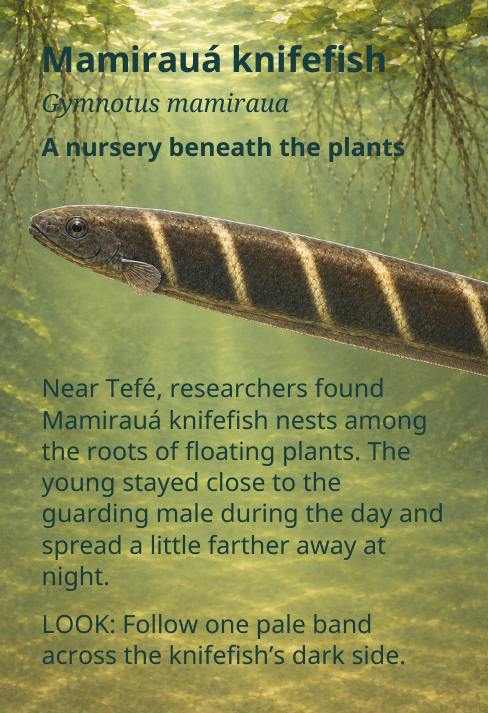
Mamirauá knifefish Gymnotus mamiraua A nursery beneath the plants Near Tefé, researchers found Mamirauá knifefish nests among the roots of floating plants. The young stayed close to the guarding male during the day and spread a little farther away at night. LOOK: Follow one pale band across the knifefish’s dark side.
Printed text
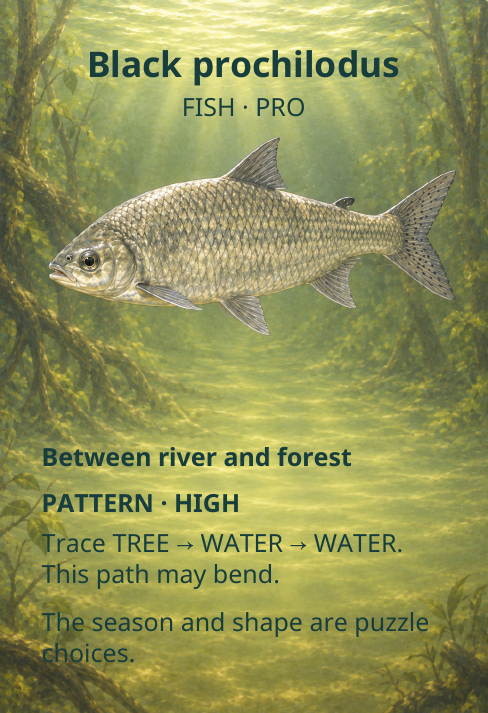
Black prochilodus FISH · PRO Between river and forest PATTERN · HIGH Trace TREE → WATER → WATER. This path may bend. The season and shape are puzzle choices.
Printed text
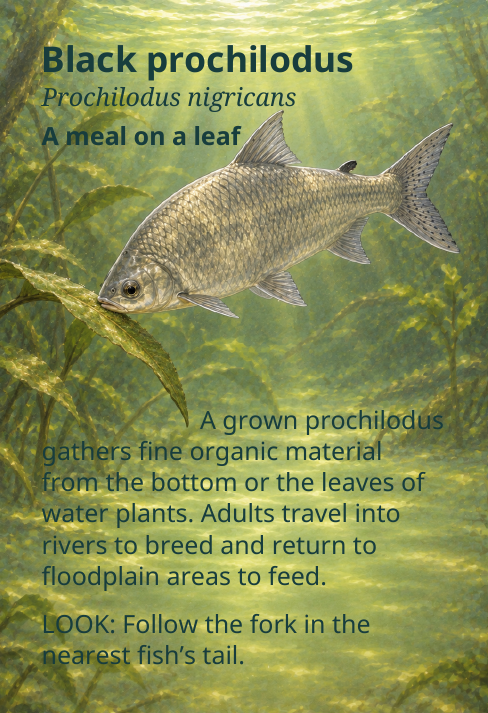
Black prochilodus Prochilodus nigricans A meal on a leaf A grown prochilodus gathers fine organic material from the bottom or the leaves of water plants. Adults travel into rivers to breed and return to floodplain areas to feed. LOOK: Follow the fork in the nearest fish’s tail.
Printed text
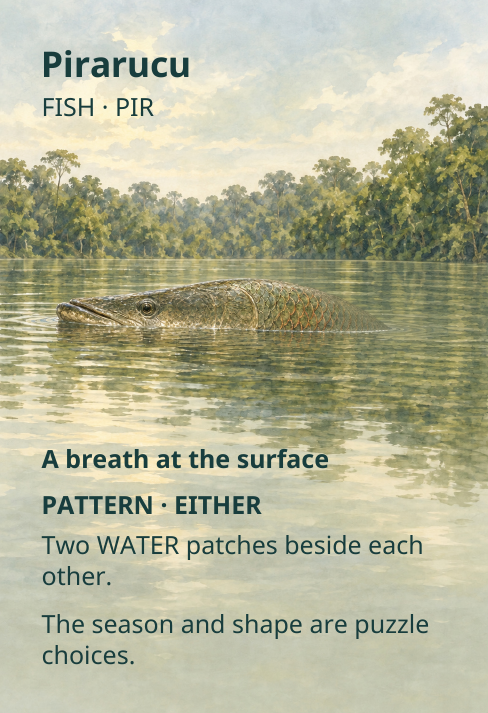
Pirarucu FISH · PIR A breath at the surface PATTERN · EITHER Two WATER patches beside each other. The season and shape are puzzle choices.
Printed text
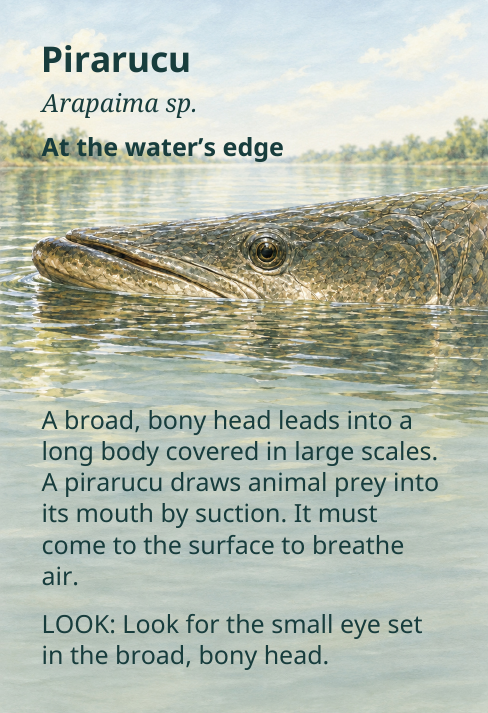
Pirarucu Arapaima sp. At the water’s edge A broad, bony head leads into a long body covered in large scales. A pirarucu draws animal prey into its mouth by suction. It must come to the surface to breathe air. LOOK: Look for the small eye set in the broad, bony head.
Printed text
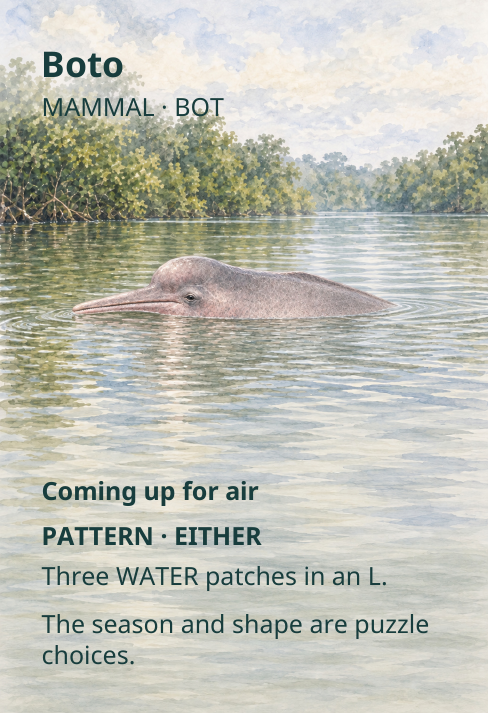
Boto MAMMAL · BOT Coming up for air PATTERN · EITHER Three WATER patches in an L. The season and shape are puzzle choices.
Printed text
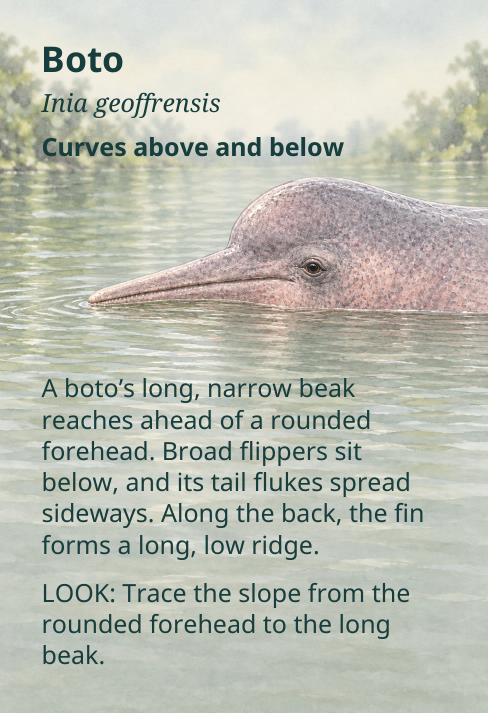
Boto Inia geoffrensis Curves above and below A boto’s long, narrow beak reaches ahead of a rounded forehead. Broad flippers sit below, and its tail flukes spread sideways. Along the back, the fin forms a long, low ridge. LOOK: Trace the slope from the rounded forehead to the long beak.
Printed text
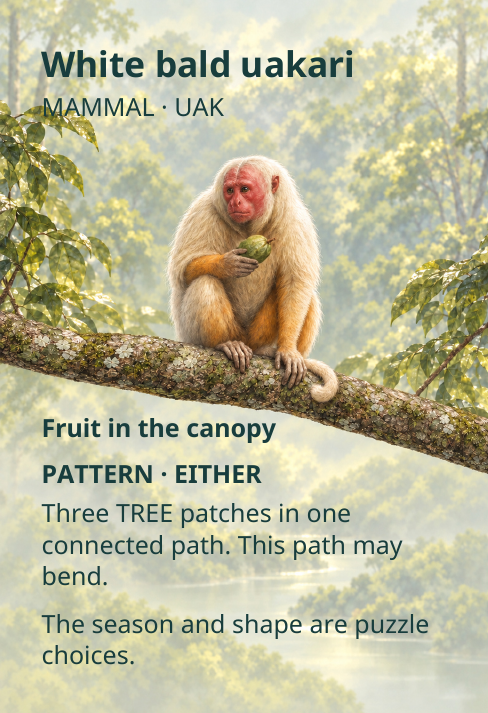
White bald uakari MAMMAL · UAK Fruit in the canopy PATTERN · EITHER Three TREE patches in one connected path. This path may bend. The season and shape are puzzle choices.
Printed text
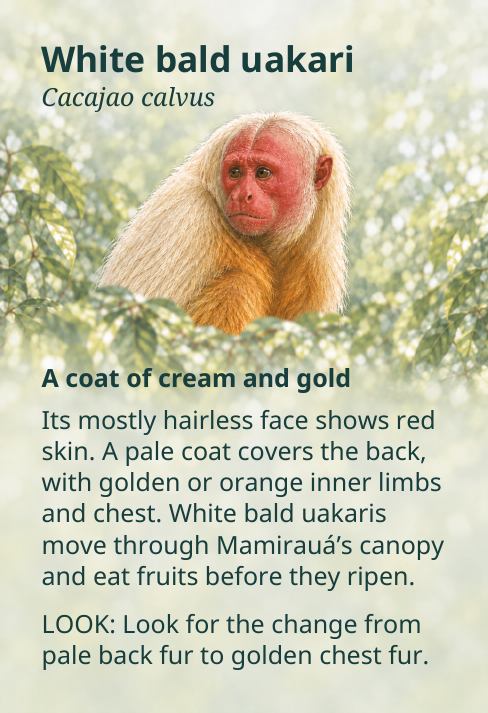
White bald uakari Cacajao calvus A coat of cream and gold Its mostly hairless face shows red skin. A pale coat covers the back, with golden or orange inner limbs and chest. White bald uakaris move through Mamirauá’s canopy and eat fruits before they ripen. LOOK: Look for the change from pale back fur to golden chest fur.
Printed text
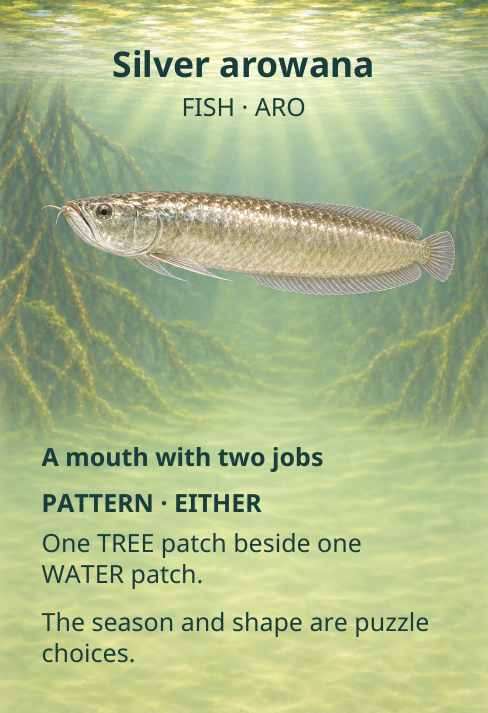
Silver arowana FISH · ARO A mouth with two jobs PATTERN · EITHER One TREE patch beside one WATER patch. The season and shape are puzzle choices.
Printed text
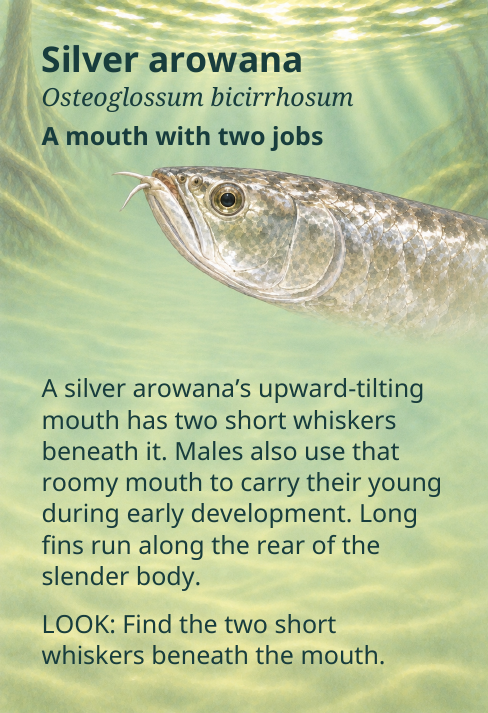
Silver arowana Osteoglossum bicirrhosum A mouth with two jobs A silver arowana’s upward-tilting mouth has two short whiskers beneath it. Males also use that roomy mouth to carry their young during early development. Long fins run along the rear of the slender body. LOOK: Find the two short whiskers beneath the mouth.
Printed text
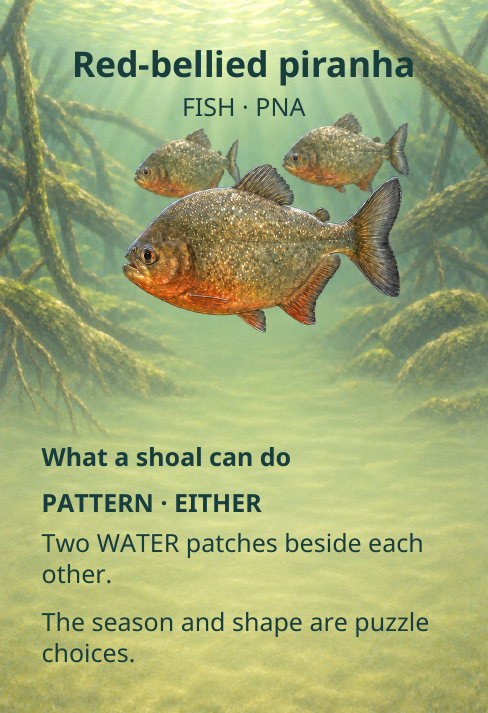
Red-bellied piranha FISH · PNA What a shoal can do PATTERN · EITHER Two WATER patches beside each other. The season and shape are puzzle choices.
Printed text
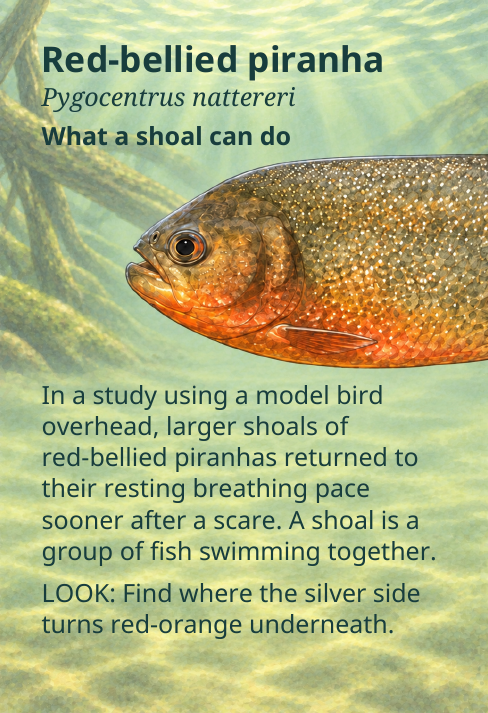
Red-bellied piranha Pygocentrus nattereri What a shoal can do In a study using a model bird overhead, larger shoals of red-bellied piranhas returned to their resting breathing pace sooner after a scare. A shoal is a group of fish swimming together. LOOK: Find where the silver side turns red-orange underneath.
Printed text
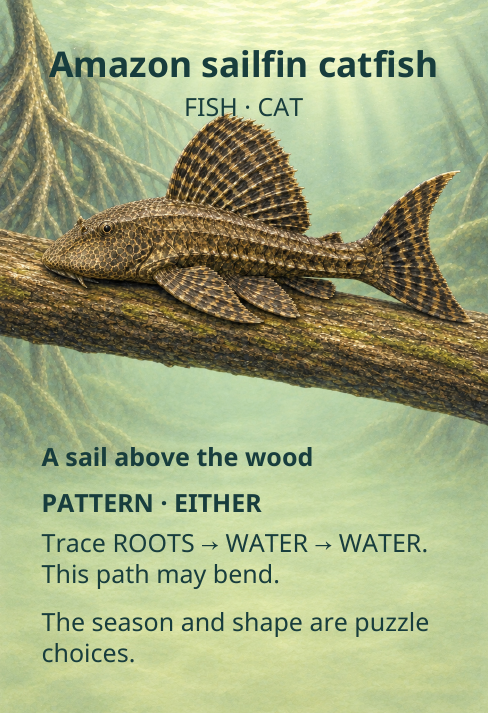
Amazon sailfin catfish FISH · CAT A sail above the wood PATTERN · EITHER Trace ROOTS → WATER → WATER. This path may bend. The season and shape are puzzle choices.
Printed text
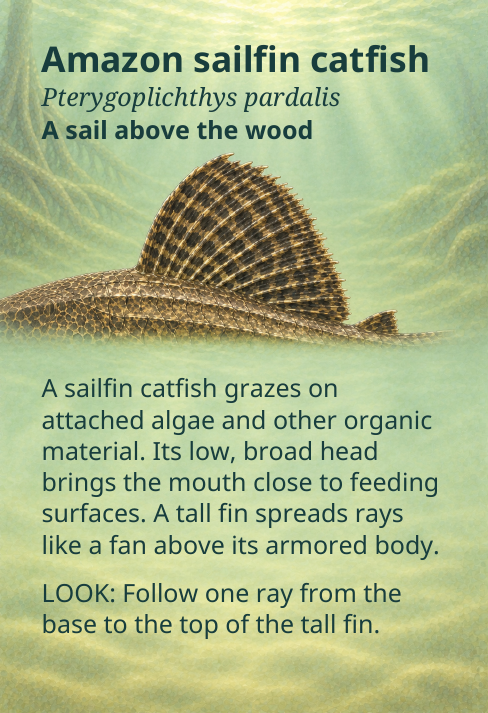
Amazon sailfin catfish Pterygoplichthys pardalis A sail above the wood A sailfin catfish grazes on attached algae and other organic material. Its low, broad head brings the mouth close to feeding surfaces. A tall fin spreads rays like a fan above its armored body. LOOK: Follow one ray from the base to the top of the tall fin.
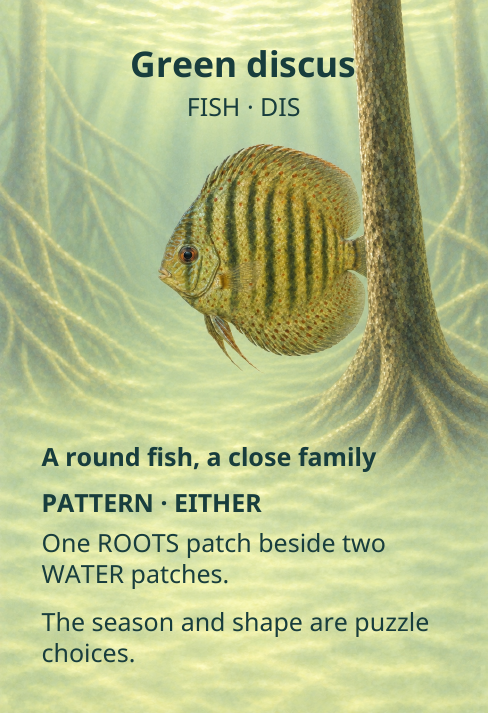
Printed text
Green discus FISH · DIS A round fish, a close family PATTERN · EITHER One ROOTS patch beside two WATER patches. The season and shape are puzzle choices.
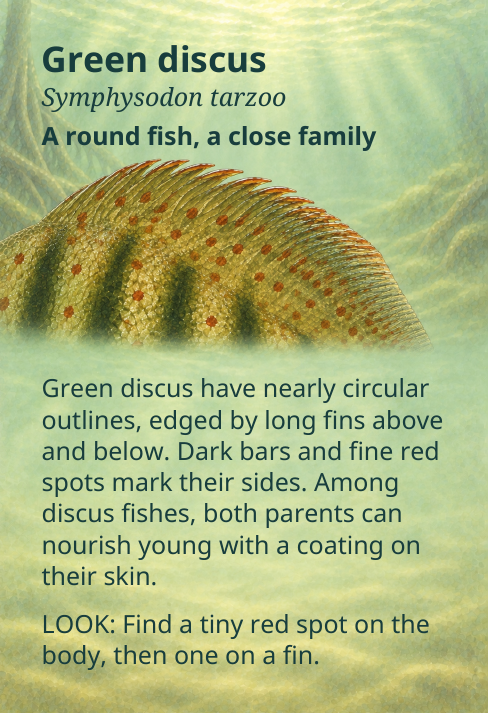
Printed text
Green discus Symphysodon tarzoo A round fish, a close family Green discus have nearly circular outlines, edged by long fins above and below. Dark bars and fine red spots mark their sides. Among discus fishes, both parents can nourish young with a coating on their skin. LOOK: Find a tiny red spot on the body, then one on a fin.
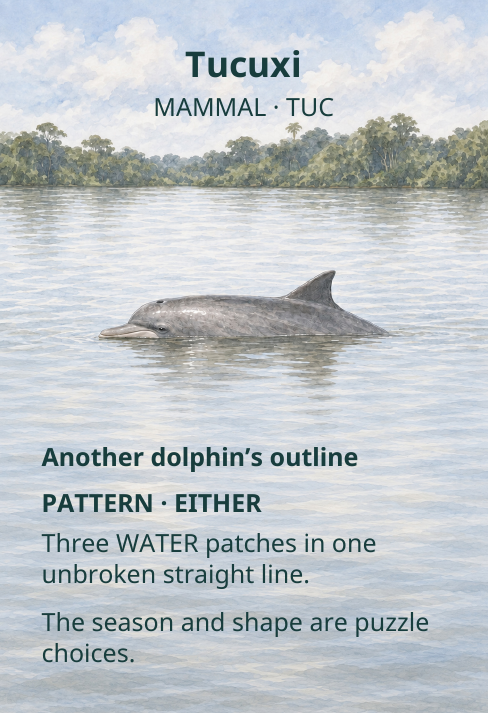
Printed text
Tucuxi MAMMAL · TUC Another dolphin’s outline PATTERN · EITHER Three WATER patches in one unbroken straight line. The season and shape are puzzle choices.
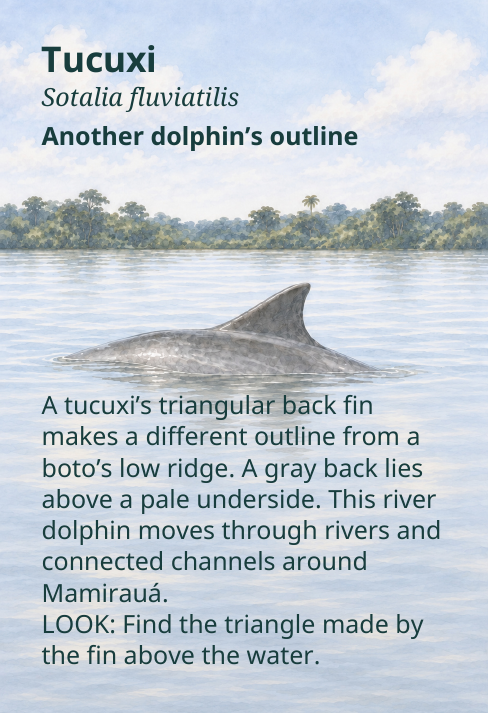
Printed text
Tucuxi Sotalia fluviatilis Another dolphin’s outline A tucuxi’s triangular back fin makes a different outline from a boto’s low ridge. A gray back lies above a pale underside. This river dolphin moves through rivers and connected channels around Mamirauá. LOOK: Find the triangle made by the fin above the water.
Printed text
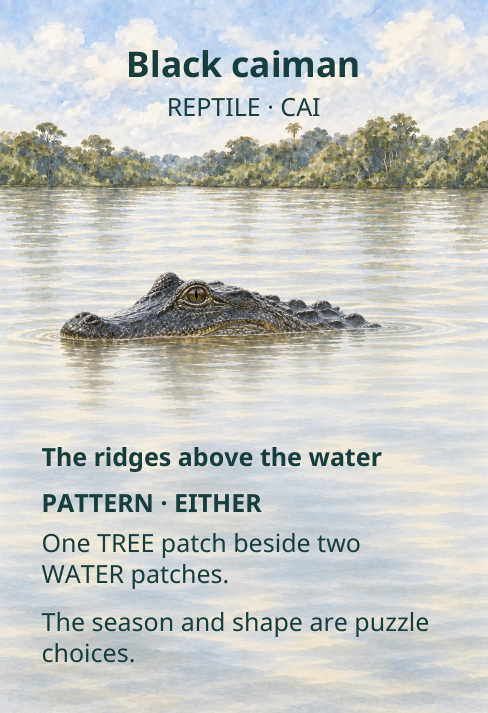
Black caiman REPTILE · CAI The ridges above the water PATTERN · EITHER One TREE patch beside two WATER patches. The season and shape are puzzle choices.
Printed text
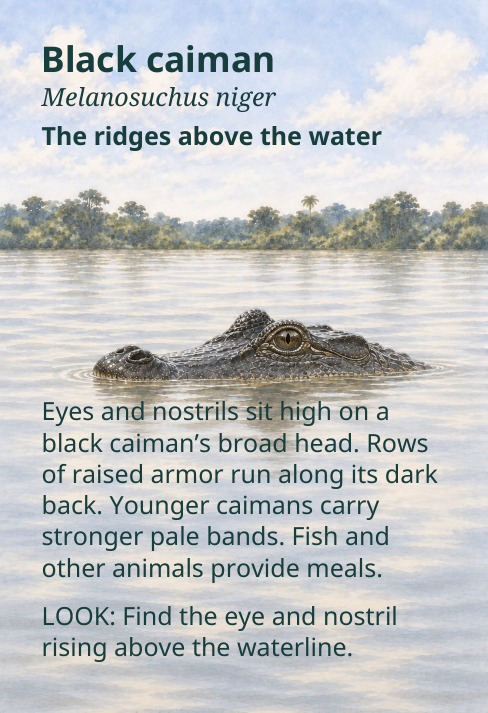
Black caiman Melanosuchus niger The ridges above the water Eyes and nostrils sit high on a black caiman’s broad head. Rows of raised armor run along its dark back. Younger caimans carry stronger pale bands. Fish and other animals provide meals. LOOK: Find the eye and nostril rising above the waterline.
Printed text
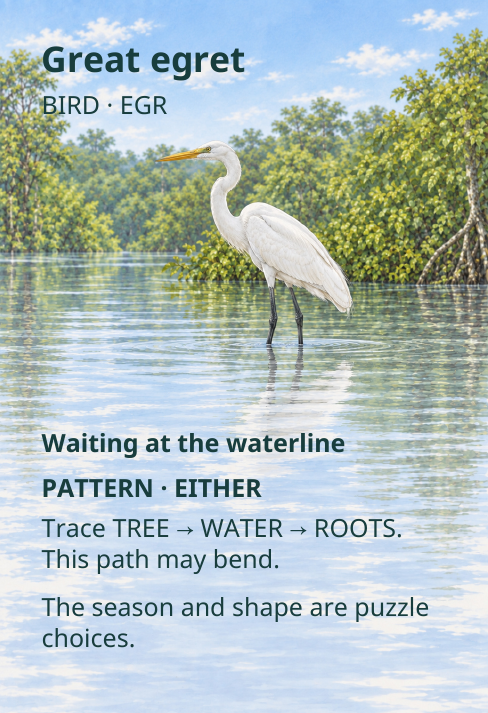
Great egret BIRD · EGR Waiting at the waterline PATTERN · EITHER Trace TREE → WATER → ROOTS. This path may bend. The season and shape are puzzle choices.
Printed text
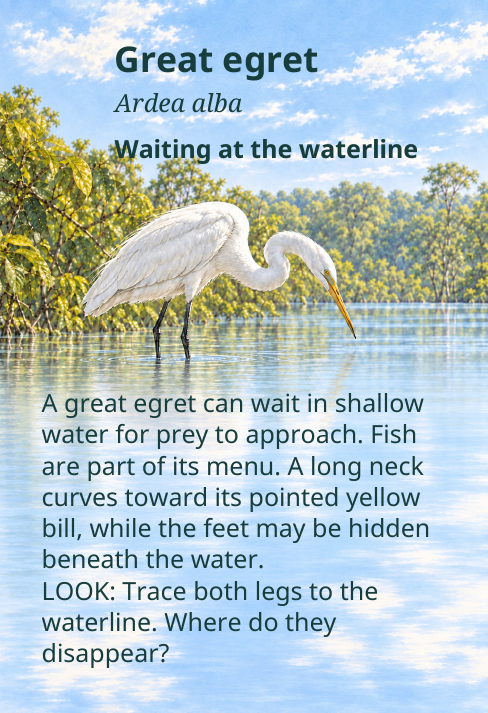
Great egret Ardea alba Waiting at the waterline A great egret can wait in shallow water for prey to approach. Fish are part of its menu. A long neck curves toward its pointed yellow bill, while the feet may be hidden beneath the water. LOOK: Trace both legs to the waterline. Where do they disappear?
Printed text
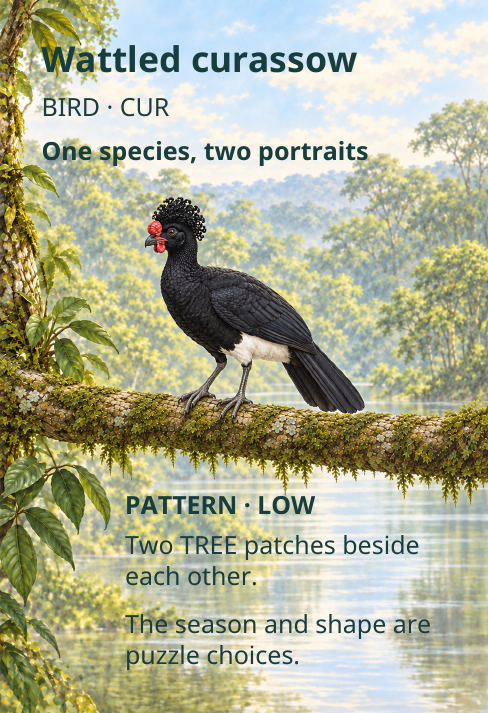
Wattled curassow BIRD · CUR One species, two portraits PATTERN · LOW Two TREE patches beside each other. The season and shape are puzzle choices.
Printed text
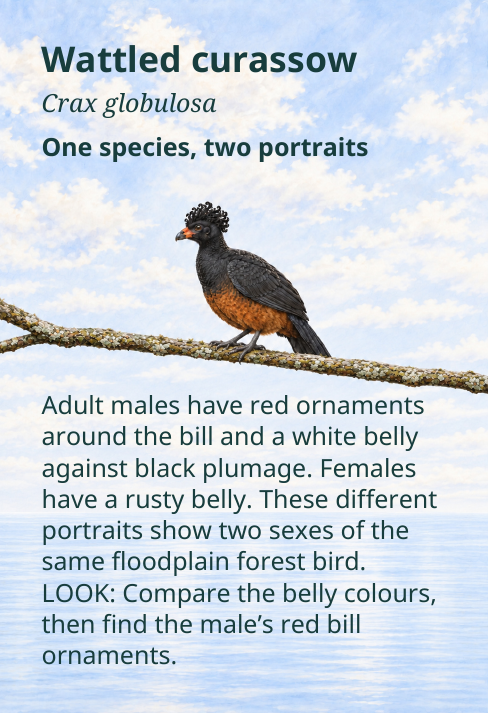
Wattled curassow Crax globulosa One species, two portraits Adult males have red ornaments around the bill and a white belly against black plumage. Females have a rusty belly. These different portraits show two sexes of the same floodplain forest bird. LOOK: Compare the belly colours, then find the male’s red bill ornaments.
Printed text
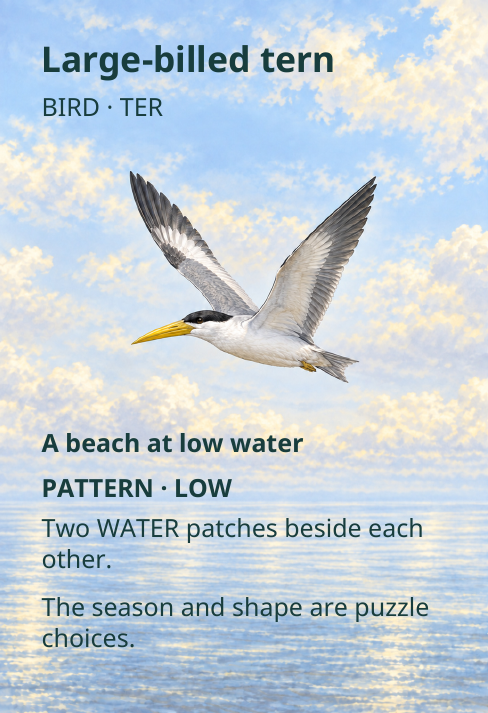
Large-billed tern BIRD · TER A beach at low water PATTERN · LOW Two WATER patches beside each other. The season and shape are puzzle choices.
Printed text
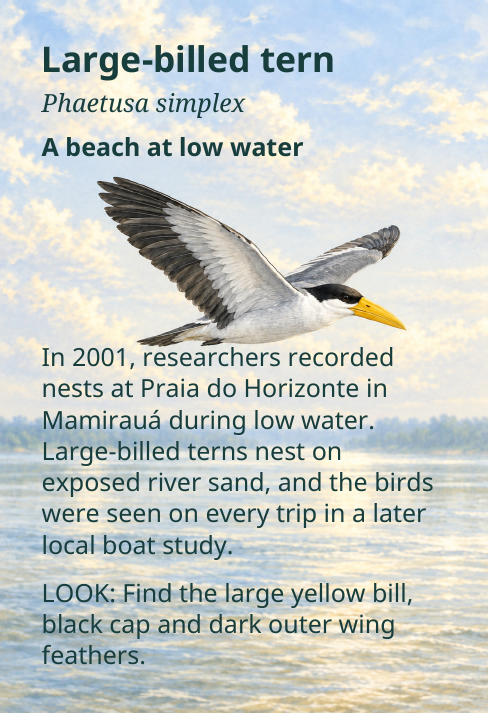
Large-billed tern Phaetusa simplex A beach at low water In 2001, researchers recorded nests at Praia do Horizonte in Mamirauá during low water. Large-billed terns nest on exposed river sand, and the birds were seen on every trip in a later local boat study. LOOK: Find the large yellow bill, black cap and dark outer wing feathers.
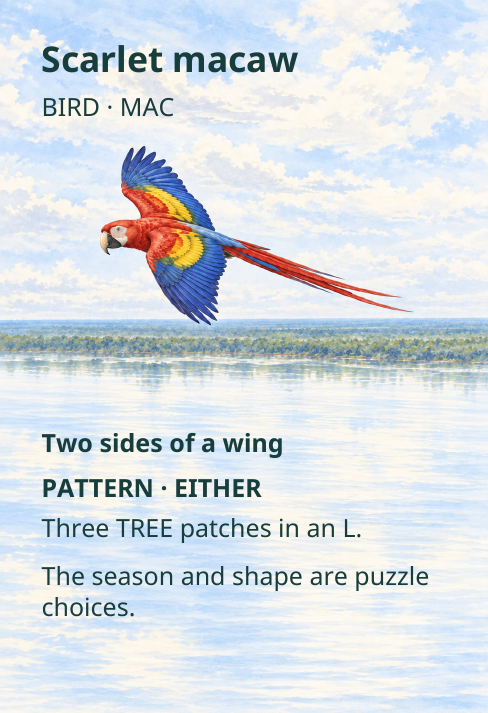
Printed text
Scarlet macaw BIRD · MAC Two sides of a wing PATTERN · EITHER Three TREE patches in an L. The season and shape are puzzle choices.
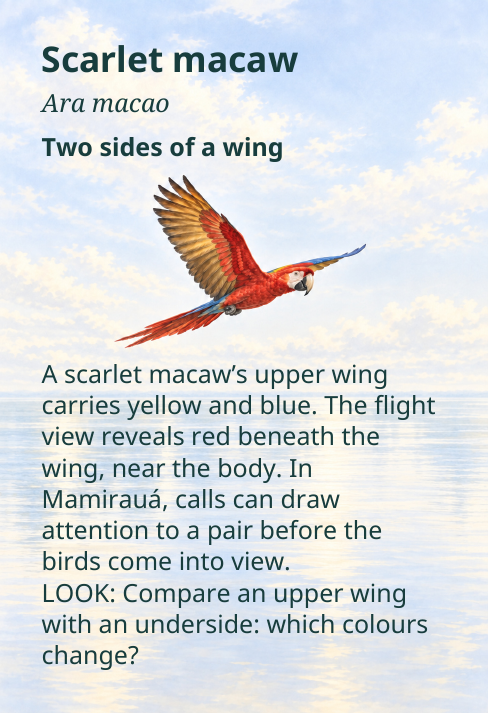
Printed text
Scarlet macaw Ara macao Two sides of a wing A scarlet macaw’s upper wing carries yellow and blue. The flight view reveals red beneath the wing, near the body. In Mamirauá, calls can draw attention to a pair before the birds come into view. LOOK: Compare an upper wing with an underside: which colours change?
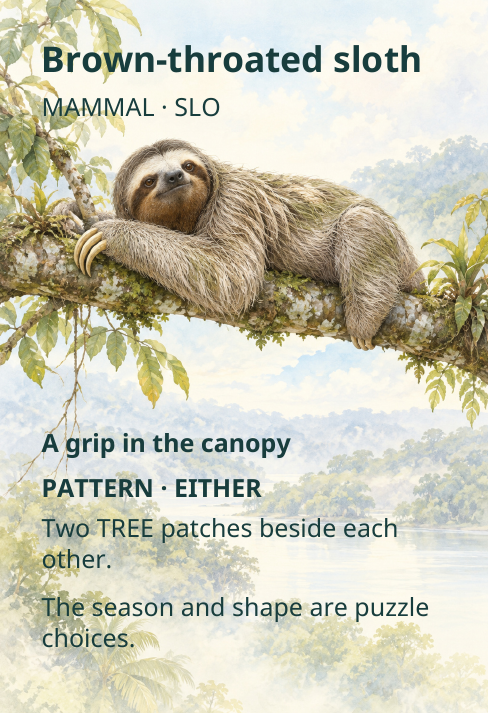
Printed text
Brown-throated sloth MAMMAL · SLO A grip in the canopy PATTERN · EITHER Two TREE patches beside each other. The season and shape are puzzle choices.
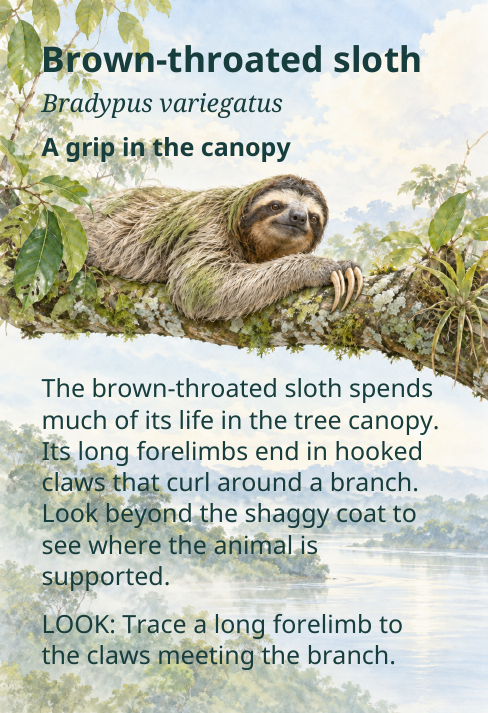
Printed text
Brown-throated sloth Bradypus variegatus A grip in the canopy The brown-throated sloth spends much of its life in the tree canopy. Its long forelimbs end in hooked claws that curl around a branch. Look beyond the shaggy coat to see where the animal is supported. LOOK: Trace a long forelimb to the claws meeting the branch.
Printed text
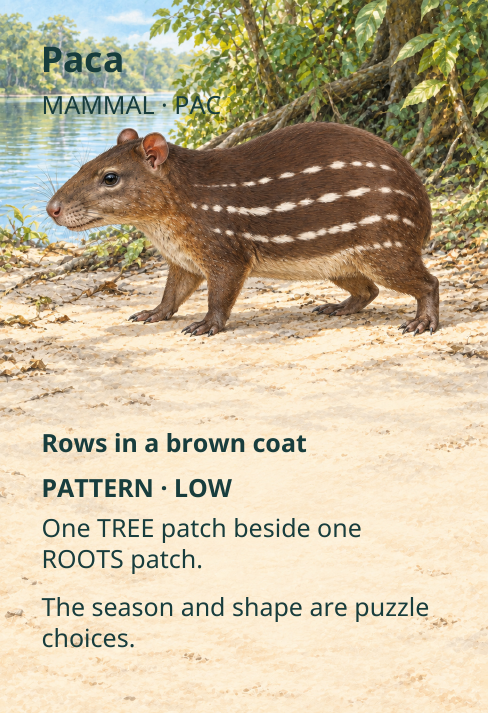
Paca MAMMAL · PAC Rows in a brown coat PATTERN · LOW One TREE patch beside one ROOTS patch. The season and shape are puzzle choices.
Printed text
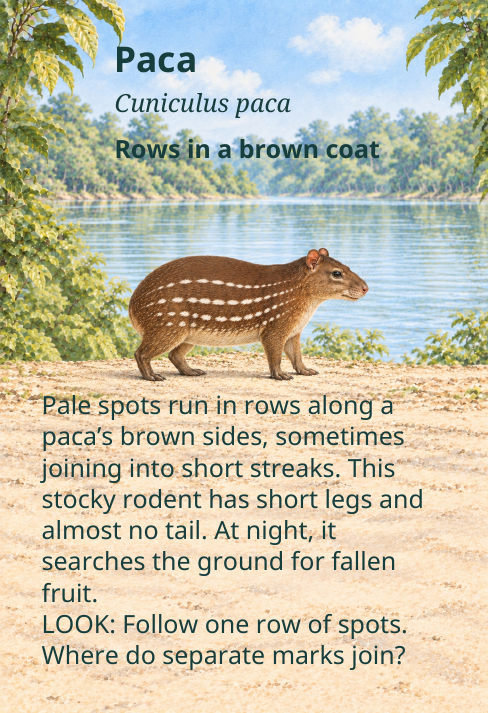
Paca Cuniculus paca Rows in a brown coat Pale spots run in rows along a paca’s brown sides, sometimes joining into short streaks. This stocky rodent has short legs and almost no tail. At night, it searches the ground for fallen fruit. LOOK: Follow one row of spots. Where do separate marks join?
Printed text
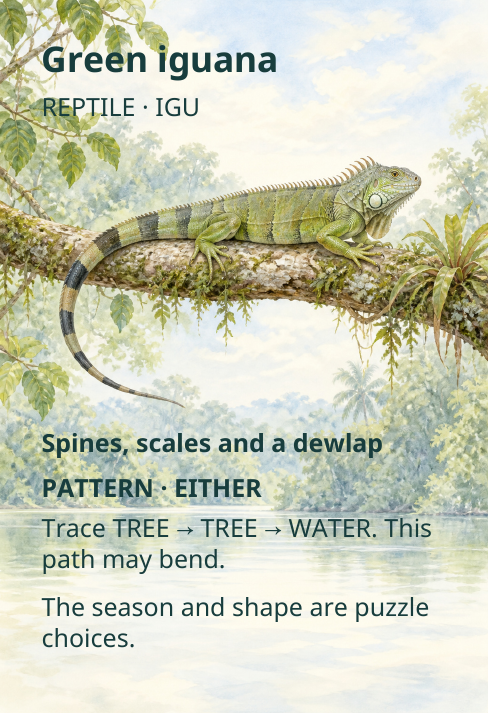
Green iguana REPTILE · IGU Spines, scales and a dewlap PATTERN · EITHER Trace TREE → TREE → WATER. This path may bend. The season and shape are puzzle choices.
Printed text
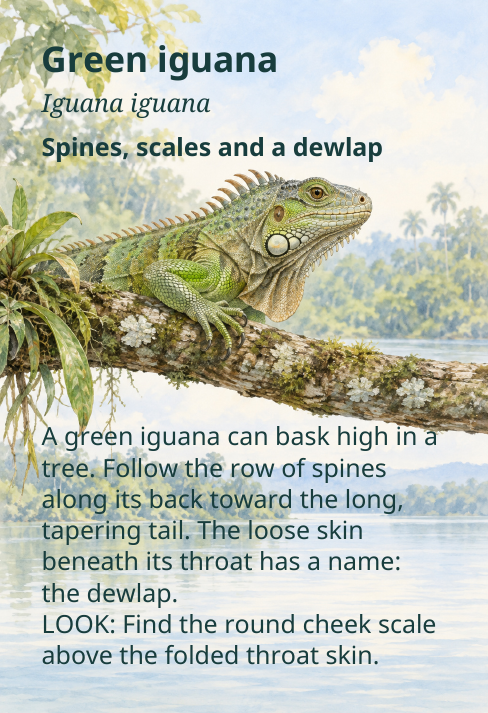
Green iguana Iguana iguana Spines, scales and a dewlap A green iguana can bask high in a tree. Follow the row of spines along its back toward the long, tapering tail. The loose skin beneath its throat has a name: the dewlap. LOOK: Find the round cheek scale above the folded throat skin.
Printed text
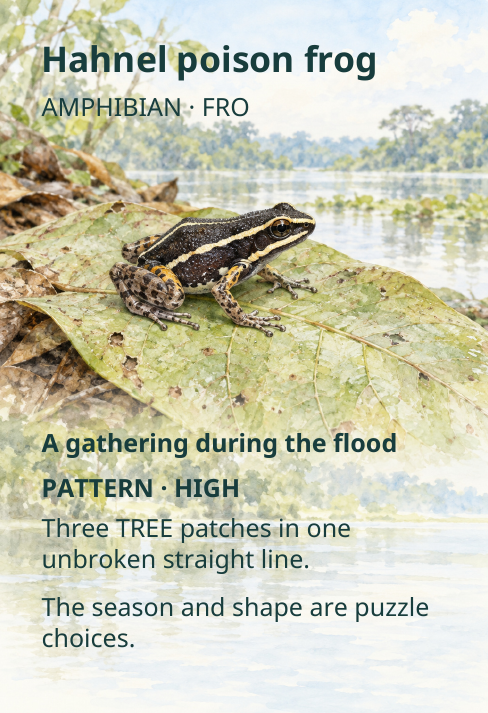
Hahnel poison frog AMPHIBIAN · FRO A gathering during the flood PATTERN · HIGH Three TREE patches in one unbroken straight line. The season and shape are puzzle choices.
Printed text
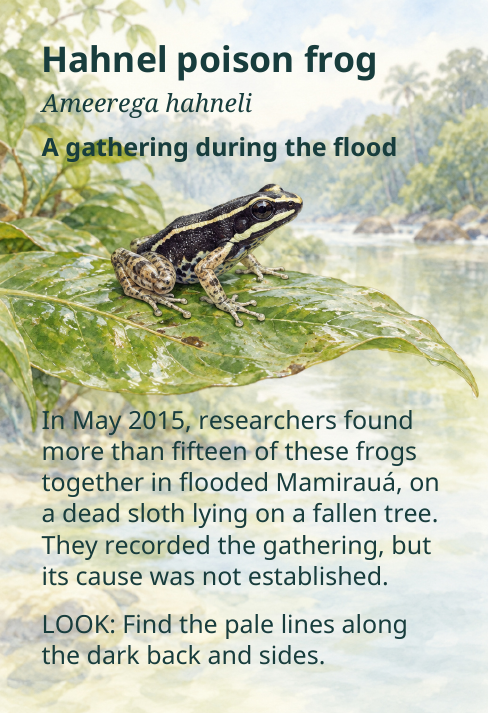
Hahnel poison frog Ameerega hahneli A gathering during the flood In May 2015, researchers found more than fifteen of these frogs together in flooded Mamirauá, on a dead sloth lying on a fallen tree. They recorded the gathering, but its cause was not established. LOOK: Find the pale lines along the dark back and sides.
55 reading and play pieces, plus seven packing and protection pieces, make 62 physical pieces. Packaging samples use invented order and adult-address details. The mailer and protection sheet are unprinted and do not have an illustrated proof.
From the actual digital pieces
A place for the next choice.
The active arrangement uses eight animal cards. Available cards overlap and need lifting to read. Its pieces occupy about 25.77 × 22.10 inches; family reach and handling still need a physical trial.
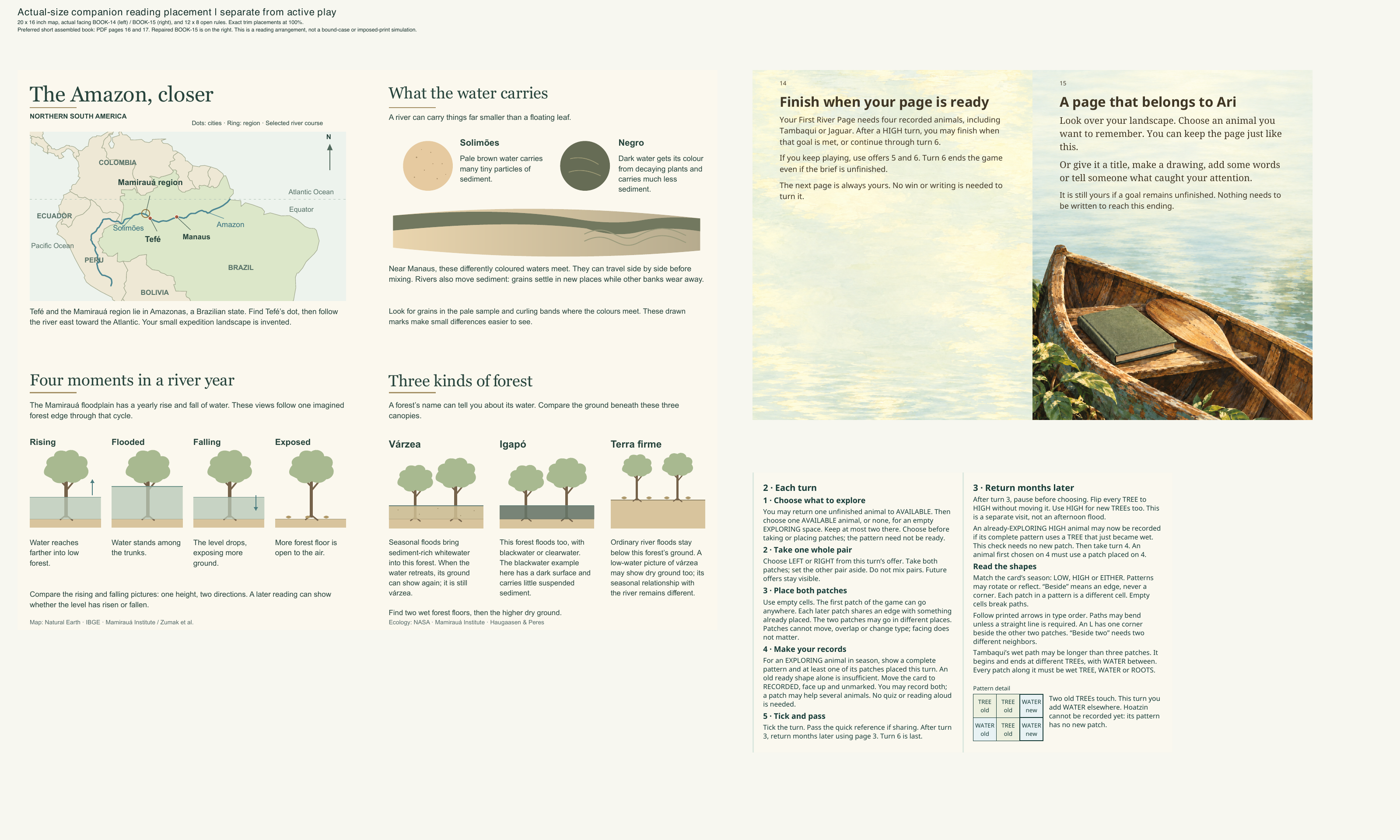
The entire first game on paper
Take the expedition to the table.
Use Letter paper and Actual Size / 100%. Check the one-inch bars on the piece sheets. An adult trims and joins matching fronts and backs, keeping both faces upright. Join map tiles A B above C D; join the upper and lower offer halves. These files preserve actual piece sizes. They do not reproduce a manufactured hardcover or qualify its materials.
For the home book, keep the PDF’s cover, inside cover and numbered pages in reading order. Paper fronts and backs are assembled by hand. Packaging is shown in the reader for inspection and is not needed for home play.
A checked digital product, ready for a closer look.
Digital layout, natural-history, editorial, rules and isolated fulfillment checks are recorded. Physical production, family use and commercial demand still need evidence. Orders remain closed.